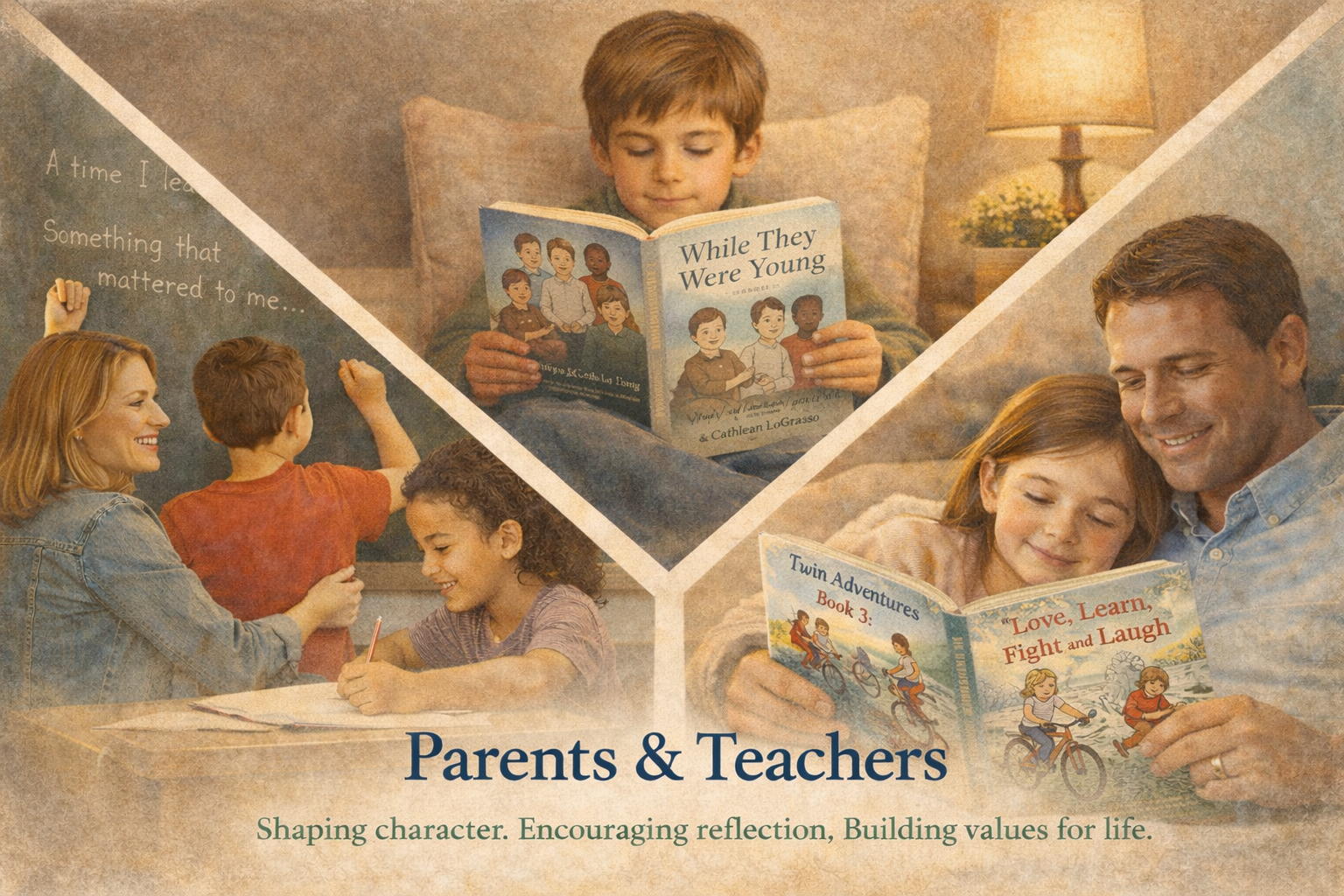
Parents & Teachers
Values for Life books are written with children, parents, and educators in mind. Each story is designed to support a “guided discovery” approach to learning.
Why Just Saying “Be Responsible” Doesn’t Work (For Kids)
Many parents wonder how to teach kids responsibility. Most children are told to be responsible, finish what they start, be kind, be honest, and do work before play. Yet in many cases, this approach simply doesn’t work.
Why does this happen? Because hearing what is right is not the same as understanding it.
If we want children to grow into confident, capable, and thoughtful adults, we must do more than give instructions. We need to also help them recognize, from within, why responsibility, honesty, and kindness truly matter.
That is where strong habits become important.
How to Teach Kids Responsibility Through Daily Habits
When learning how to teach kids responsibility, it’s important to understand one key idea. Consistent daily effort—not occasional reminders—helps children grow into capable, confident, and self-reliant adults.
These qualities don’t suddenly appear in adulthood. Instead, they develop over time. In fact, they begin in childhood—often through small, everyday moments that quietly shape character.
For example, simple habits can make a lasting difference:
Doing work before play
Finishing what was started
Being honest, even when it’s difficult
Showing kindness and consideration toward others
Helping one another without being asked
Taking pride in one’s work
Over time, these habits shape the kind of adults children become. As a result, they also influence the strength of families and communities.
Why Stories Teach Better Than Lectures
One of the most effective ways to help children build strong habits is through storytelling. Unlike lectures or repeated instructions, stories engage imagination and spark curiosity.
As children follow characters who learn and grow, they begin to see themselves in those situations. Because of this, stories create a deeper connection.
Through story, a child does more than hear a lesson—the child experiences it. Then, that experience can lead to reflection. Over time, reflection leads to internal understanding.
For this reason, stories help children:
Develop empathy and kindness
Understand cause and effect
Build confidence in learning
Recognize the value of persistence
Understand honesty and trust
Connect responsibility with pride and personal growth
As a result, stories shape character while also strengthening reading skills.
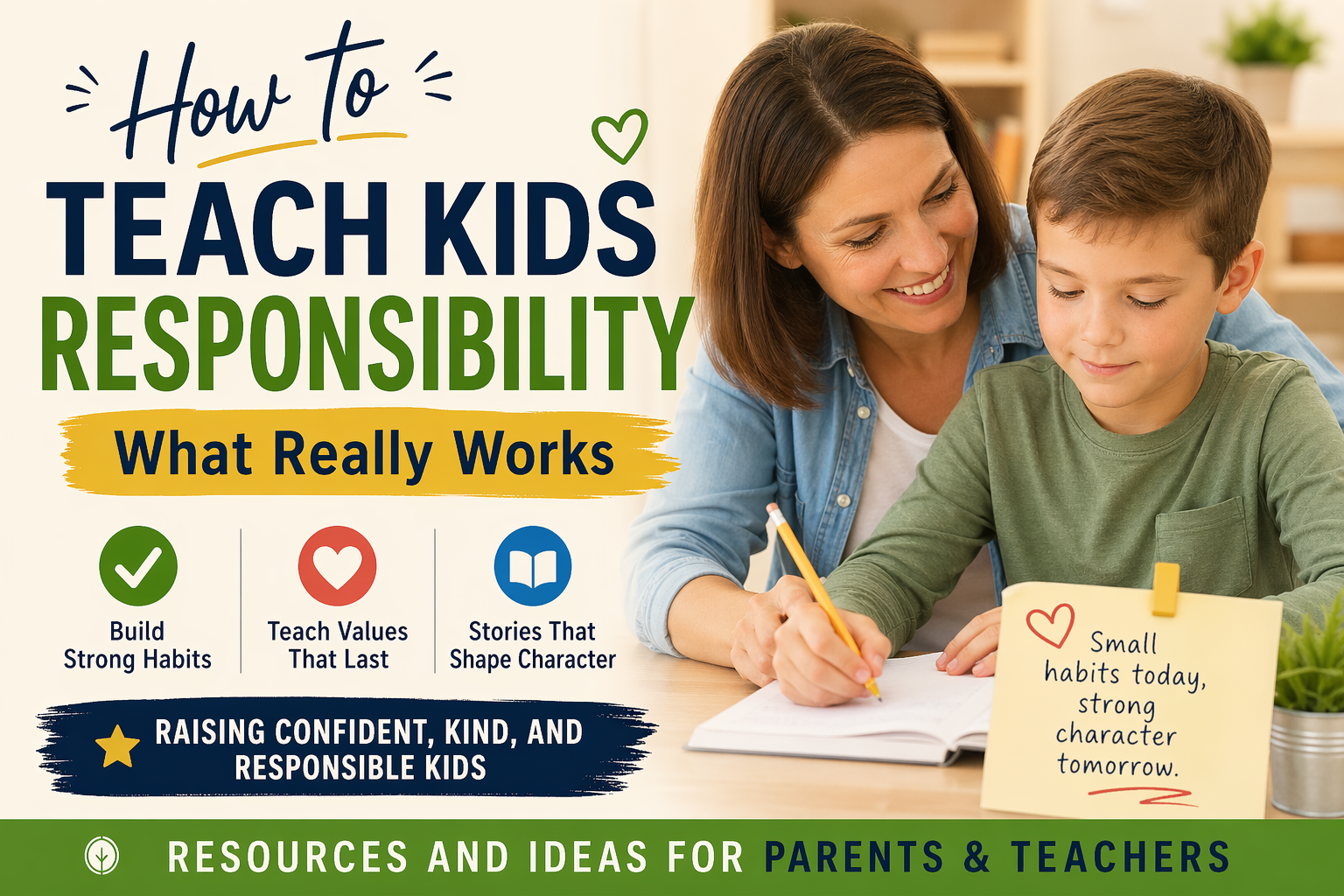
Most children are told what’s right.
Few are given the opportunity to recognize it for themselves.
A Better Way to Teach Values
Many approaches to teaching values fall into two extremes. On one hand, some rely on direct instruction, where adults simply tell children what is right and wrong. These days you’re lucky if that works unless you rule with an iron fist.
On the other hand, giving too little guidance doesn’t work either. When children are left to figure everything out on their own, whether they develop strong values often comes down to chance.
Maybe they’ll learn some values and not others. It’s most likely hit and miss with actually helping children internalize all the values we want them to learn.
But when you add a guided discovery approach to the mix where needed it offers a better path.
Through story, children experience a value, reflect on it, and begin to recognize it internally.
Because their learning is slowly becoming internalized, the learning stays with them.
Children who internalize values are more likely to:
Resist peer pressure
Think independently
Act with integrity, kindness, and honesty—even when no one is watching
In other words, they are not just following rules. They understand why those values matter.
So that over time, they don’t need to be told. They don’t just follow values—they understand them.
If we want children to grow into adults who can appreciate and protect our world, our freedoms, and our values we must help them build the habits and values that make it possible.
How to Use These Books (For Teachers)
Values for Life books are flexible. Each story can be read aloud, used for guided discussion, or revisited independently by students. Teachers may choose to pause at key moments to invite reflection, ask open-ended questions, inspire writing assignments, or connect the story to students’ own experiences.
The books work well as gentle anchors for lessons on character, responsibility, empathy, and perseverance — without requiring additional materials or rigid lesson plans.
Classroom-Friendly Features
Short chapters and clear story arcs
Relatable situations drawn from everyday childhood experiences
Natural opportunities for discussion and reflection
Appropriate for whole-class, small-group, or individual reading
For parents & caregivers looking for practical ways to learn how to teach kids responsibility…
Using These Stories at Home
At home, Values for Life books are meant to be shared, discussed, and revisited over time. Parents and caregivers may choose to read together, talk about a character’s choices, or simply let a story linger and resurface naturally in daily life.
The books are not designed to lecture or instruct, but to open space for children to think, ask questions, and develop their own sense of responsibility and care for others.
Gentle Ways to Engage
Read together and pause for questions
Ask, “What would you do?” instead of “What should they do?”
Revisit favorite stories as children grow
Allow different interpretations — there are no “wrong” answers
A Note on Values-Based Learning
Values for Life books focus on universal qualities such as effort, honesty, kindness, perseverance, and responsibility. The stories are designed to be inclusive, thoughtful, and respectful of different family values and classroom cultures, making them suitable for a wide range of learning environments.
Above all, these stories are meant to support the important work already being done by parents and teachers — helping children grow into thoughtful, capable, and caring individuals.